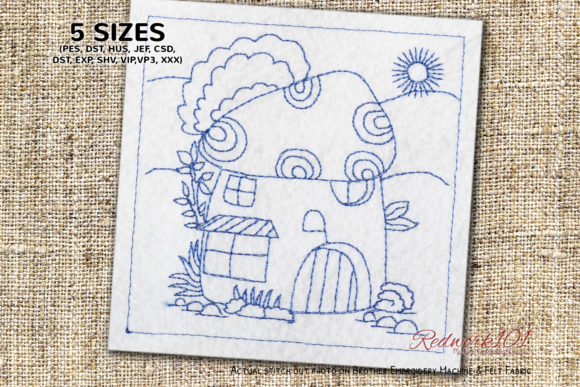
Small Mushroom House Lineart Design
As an embroidery designer who spends a lot of time digitizing and testing files for real garments, I know the difference between a flimsy clipart conversion and a robust machine embroidery design. When I first opened the Small Mushroom House Lineart Design for a limited sweatshirt embroidery project, I was looking for a specific kind of charm—something that would translate well onto a cozy hoodie design without feeling bulky or childish. This design delivers a fairy tale mood that feels both whimsical and intentional. It’s the kind of House you expect to see in a storybook, rendered in clean lines that suggest a premium, hand-drawn feel.
First Impressions: Mood, Scale, and Stitching Personality
The Small Mushroom House Lineart Design wears its personality on its sleeve—literally. The lineart style gives it a minimal, modern look that bridges the gap between cute and elegant. For a boutique brand, scale is everything. A "small" design is ideal for a left chest placement on a crewneck or a centered look on a baby tee. The detail level is moderate; it is not overly dense, which means it will stitch out quickly and maintain a soft hand. This is crucial for sweatshirt embroidery, where heavy stitching can make the fabric pucker or feel stiff. The fairy tale aspect makes it highly decorative, but the lineart keeps it from being too loud. It has a feminine, storybook quality that appeals to a broad audience, from childrenswear to adult matching sets. The Embroidery here acts as an illustration, giving the garment a collectible, artistic feel.
Sweatshirt Placement: Where Does This Design Shine?
When I am prepping a hoodie design for a real drop, I consider the entire canvas. The Small Mushroom House Lineart Design is incredibly versatile for custom apparel. Here is how I would evaluate placement for a boutique collection:
- Left Chest: The classic spot. On a neutral or pastel sweatshirt, this creates a subtle, logo-like impact. It feels like a signature piece for a handmade product.
- Center Chest: Perfect for a bolder statement, especially on a crewneck sweatshirt or a pullover hoodie. This placement works well for lifestyle product photography.
- Sleeve Accent: A single house on the bicep or cuff area. This is a massive trend in commercial embroidery right now for boutique brands. It adds a surprising detail.
- Back Design: While small, it could be used as a center upper back design, or scaled slightly if the embroidery file allows. It creates a clean, finished look for mockups.
The Case for the Optional Box Stitch
The product description notes that the Box Stitch is optional, and the color of the outer box often differs from the rest of the design. As a designer, I love this flexibility. A box stitch can act as a fence, containing the whimsy of the mushroom house and giving it a structured, patch-like feel. However, on a thick, cozy sweatshirt, a dense box stitch can sometimes cause the center to bubble or feel stiff. My advice? If you want a soft, drapey finished product, skip the box or use a very light underlay. If you want that structured, embroidered patch look, use a contrasting thread color for the box to make the design pop. For a handmade product, this choice defines the mood—rustic and soft versus bold and graphic.
Technical Deep Dive: Thread, Fabric, and Stabilizer
Let us talk about the nuts and bolts of making this machine embroidery design work on a commercial level. A boutique brand cannot afford thread breaks or puckering on a small shop product. Here are the practical considerations:
- Thread Color Contrast: This is critical. The lineart is delicate. On a dark fabric (forest green, charcoal, navy), use a bright, high-contrast thread like white, silver, or gold. On a pastel or neutral fabric (cream, blush, heather grey), a dark thread (black, deep brown, wine) or a metallic thread works beautifully. The optional box stitch in a different color is a great way to introduce a third accent thread color.
- Stitch Density & Fabric Texture: The design is lineart, so it likely has a low to moderate stitch density. This is excellent for sweatshirt fleece. It means the fabric will not get chewed up, and the design will retain its shape. Avoid using it on very loose knits without a heavy stabilizer. The fabric texture of a French terry hoodie is the perfect match for this style.
- Hoop Size & Placement: Because it is small, you can use a mini hoop (4x4 or 5x7). This makes placement easy. Use a basting stitch or a water-soluble pen to center it perfectly on the chest or sleeve. For a small shop product, ease of production is key to profitability.
- Stabilizer Choice: For sweatshirt embroidery, I always recommend a medium-weight tear-away or a cut-away stabilizer. Given the lineart nature, a tear-away will work well, but a cut-away is best for long-term durability and preventing the fabric from stretching out the stitches over time.
Durability for Commercial Apparel
A boutique brand relies on the finished product holding up. A design that pulls or puckers after one wash will destroy buyer trust. The Small Mushroom House Lineart Design, with its clean lines, should be inherently stable. I recommend testing a stitch-out on a scrap of your actual sweatshirt fabric. Check for thread pull. Use a good quality thread (polyester or rayon) to ensure colorfastness. This design has the potential to be a strong, durable addition to your apparel line if you pair it with the correct stabilizer for your fabric weight.
Business Impact: From Embroidery File to Brand Identity
For an Etsy seller or a boutique owner, design assets are everything. The Small Mushroom House Lineart Design is a fantastic digital embroidery file because it translates into a highly marketable finished product. Here is how it affects your business:
- Visual Recognition: A unique, beautiful design like this sets your custom apparel apart from generic, mass-produced hoodies. It creates a signature look that customers will recognize.
- Customer Engagement: Fairy tale and whimsical designs are highly engaging on social media. They tell a story. This hoodie design will photograph beautifully in lifestyle product photography.
- Etsy Listings: A strong embroidery file allows you to create clear, attractive mockups. A printable mockup showing the design on a pastel sweatshirt will convert better than a flat photo of the file.
- Product Value: An embroidered garment instantly feels more premium. Adding a thoughtful, well-designed embroidered piece like this can justify a higher price point, improving your margins on handmade product lines.
Design Assets and Mockup Presentation
Before you stitch, use the digital embroidery file to create stunning mockups. Layer the design onto a neutral sweatshirt photo. Show the scale. Show the optional box stitch. Let your customers choose. This level of presentation builds confidence and pre-orders. It elevates a simple hoodie into a collectible piece of wearable art. For commercial embroidery success, the visual story is just as important as the stitch quality.
Final Verdict for the Small Shop Owner
The Small Mushroom House Lineart Design is a versatile, commercially viable machine embroidery design that strikes a perfect balance between playful and premium. It feels at home on a cozy, rustic sweatshirt but has the clean lines to look modern and minimal. It is feminine without being too cute, and decorative without being cluttered.
Who is this for? The Etsy seller looking to expand their fairy tale collection. The boutique brand wanting a signature hoodie design. The crafter making handmade gifts. The apparel decorator seeking a versatile digital file. My final advice? Check your hoop size, test your thread colors on your specific fabric texture, and decide on the box stitch based on the drape you want. This is a solid, beautiful design that will serve your small business well. It is a magical addition to any commercial embroidery lineup.