Bhimashankar Temple Redwork: A Designer’s Review
As an embroidery designer who spends every weekend digitizing files or packing inventory for a craft fair, I have developed a sharp instinct for what will move off the table and what will sit untouched. When I first reviewed Bhimashankar Temple Redwork, I knew immediately that this was not a generic fill-a-hoop design. This is a product with presence. It speaks to a specific buyer, tells a story, and carries a level of cultural depth that is rare in the average handmade market. If you are an Etsy seller or a small shop owner looking to diversify your product lineup with something meaningful, this design warrants a serious look.
First Impressions: The Power of Spiritual Redwork
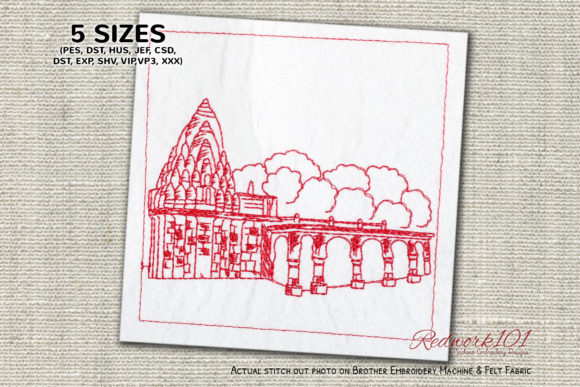
The name itself sets the tone. Bhimashankar Temple Redwork combines the rich heritage of traditional redwork embroidery with the sacred geometry of one of the most revered temple structures. The first impression is one of elegance, tradition, and quiet strength. It is not a cute or whimsical design. It is sophisticated, spiritual, and undeniably premium. The redwork style—typically a single bold color on a natural or cream fabric—gives the entire piece a vintage, heirloom quality. This is the kind of embroidery that looks like it has been passed down through generations.
The optional box stitch adds a framing element that can serve as a border or a separate accent. As the description notes, the outer box color is often different, or you can skip it entirely. This flexibility is a huge advantage for a designer. It means you can offer a “framed” version and a “standalone” version of the same base product, effectively giving you two distinct looks from a single machine embroidery design. For a craft fair product, this kind of versatility is gold.
Evaluating Bhimashankar Temple Redwork for Your Booth
When I am planning a booth display, I evaluate every design based on three factors: visual stop, perceived value, and production efficiency. Bhimashankar Temple Redwork scores high on the first two, but requires a bit of strategic thinking for the third.
Best Products for This Design
This is not a design that belongs on a cheap give-away item. It belongs on quality blanks that justify its intricate nature. Here is where I would put it to work:
- Premium Tote Bags: A structured, heavy cotton or linen tote bag is the perfect canvas. The density of the temple architecture stitches beautifully on a stable fabric. Customers will see this as a statement bag, not just a grocery carrier.
- Pillow Covers: Home decor is a massive market at craft fairs. An embroidered pillow cover featuring Bhimashankar Temple Redwork becomes a spiritual accent piece for a living room or meditation space. It adds a layer of handmade luxury that machine-printed fabrics cannot replicate.
- Tea Towels and Kitchen Linens: While some might reserve this for sacred spaces, high-quality linen tea towels embroidered with this design sell exceptionally well as gifts. They feel elevated, ritualistic, and thoughtful.
- Framed Hoops: This is where this design truly shines. Customers looking for ready-to-hang spiritual art will pay a premium for a well-finished hoop. The redwork style is inherently suited for display, and the intricate lines of the temple invite close inspection.
- Embroidered Patches: For a younger demographic or those who love customizing jackets and bags, a high-quality patch of Bhimashankar Temple Redwork is a unique offering. It signals a deep appreciation for art and culture.
Where to Exercise Caution
I have to be honest with you as a fellow maker. Not every product is a good match for this design. The detail involved in a temple structure means you need to be careful about your base fabric and product shape.
- Curved Surfaces (Caps): Be very careful stitching this on a cap. The curve can easily distort the straight lines and symmetry of the temple architecture. If you do attempt it, keep the hoop size small and test thoroughly.
- High Texture Fabrics: Avoid thick terry towels or rough burlap. The fine details of the design will be lost in the texture. Stick to smooth, tight-weave fabrics.
- Very Small Products: Tiny pouches or coin purses may not offer enough surface area for the design to read clearly. This design needs room to breathe.
- Dark Fabric: Classic redwork assumes a light background. If you must use dark fabric, consider using a white, gold, or bright metallic thread. The contrast must be stark to preserve the architectural details.
Production Notes from an Experienced Digitizer
Before you load that embroidery file and hit start, let’s talk about the technical side. Bhimashankar Temple Redwork likely has a moderate to high stitch density due to the intricate lines and fills typical of temple motifs. This is not a quick 10-minute stitch-out. Plan for it.
- Stabilizer Is Critical: Use a medium-weight cut-away stabilizer for knit or stretch fabrics. For stable wovens like linen or cotton, a high-quality tear-away will work, but I always recommend testing first. A dense design can sometimes warp a fabric if the stabilizer is too light.
- Needle Selection: Use a sharp 75/11 or 80/12 needle. A ballpoint needle can cause skipped stitches on dense satin columns.
- Thread Contrast: The beauty of redwork is the simplicity of the thread colors. A deep, rich red on a natural or cream fabric is classic. But do not be afraid to experiment with other single-color combinations, such as navy on natural or black on gold, to create a different mood.
- The Optional Box Stitch: The description notes that the box stitch is a separate color and can be skipped. This is a great feature. I would recommend stitching out a test with the box and without the box to see which version you prefer for your specific product line. It also allows you to offer a “custom frame” option to customers.
- Check Your Hoop Size: Verify the hoop size required for the design. If it requires a 5x7 or 8x8 hoop, ensure your machine can handle it before you buy the digital embroidery file.
The Etsy and Shop Seller’s Perspective
For those of you selling on Etsy or running a small shop product line, Bhimashankar Temple Redwork is a fantastic asset for a specific niche. The market for spiritual and religious embroidery is often underserved in the broader handmade market. This design gives you a clear entry point.
Photography and Listing Strategy: This design photographs beautifully because of the high contrast inherent in redwork. Use natural light to capture the sheen of the thread and the depth of the stitching. Include close-up shots that show the intricate details of the temple architecture. In your listing, use terms like “machine embroidery design,” “spiritual wall art,” “temple redwork,” “Jyotirlinga embroidery,” and “Hindu decor.”
Printable Mockups: If you are selling the digital embroidery file, provide a printable mockup that shows the design on a tote bag, a hoop, and a pillow. This helps your customer visualize the finished product and makes them more likely to purchase. The optional box stitch is a great feature to highlight in your listing photos, showing the versatility of the design assets.
Commercial Licensing: I cannot stress this enough. Before you start stitching for a craft fair, confirm the commercial embroidery license terms for this file. Since it is in the Religion category, some designers have specific restrictions. Respect the artist’s work and the culture the design represents.
Booth Display and Customer Engagement
When a customer walks by your booth, they are scanning for something that catches their eye. Bhimashankar Temple Redwork acts as a visual anchor. The intricate linework invites people to step closer. I have seen it happen: a customer will stop, pick up a framed hoop, and just stare at the detail. That is the moment you engage them.
Tell the story. Explain that this represents a real temple, a sacred site. The story adds immense value. Customers are not just buying an embroidered patch; they are buying a piece of art with a soul. This elevates your entire brand from a maker of trinkets to a creator of meaningful handmade products.
For batch production, the single-color nature of redwork is a blessing. You do not need to change thread frequently, which speeds up your workflow. Once you have your test stitched and your settings dialed in, you can produce a consistent run of high-quality items. This is efficient for a busy seller preparing for a weekend market.
Final Verdict: Is Bhimashankar Temple Redwork a Booth Essential?
Absolutely, but with the right strategy. This is not a one-size-fits-all design. It is a specialty item that caters to a specific, appreciative audience. If you are a generic craft fair seller with only farmhouse florals and cute sayings, this might feel out of place. But if you want to differentiate your booth, offer meaningful cultural products, and attract customers who are looking for something deeper, Bhimashankar Temple Redwork is a powerhouse.
It commands a higher price point, it looks premium in person, and it tells a story that mass-produced items cannot. My advice? Test it on a quality linen tote and a framed hoop. Bring those to your next booth. Put them at eye level. Watch how people react. I am willing to bet that this design will not only sell, but it will also bring a new level of respect and sophistication to your entire handmade product lineup. It is a clear win for the thoughtful maker.