Dreadnought Acoustic Guitar Redwork: A Designer's Review
As a professional embroidery designer who has reviewed hundreds of machine embroidery designs for small business merchandise, I approach every new file with a critical eye. When I first opened the Dreadnought Acoustic Guitar Redwork, I was curious how a musical motif would translate into a commercial embroidery asset. After testing it on multiple substrates and evaluating its performance across typical business applications, I am ready to share my findings. This review is written for small business owners, embroidery shops, apparel decorators, handmade brands, Etsy sellers, merch creators, and anyone purchasing digital embroidery files for branded merchandise. Let me walk you through what this design can do for your business.
First Impressions: Professional, Rustic, and Ready for Commerce
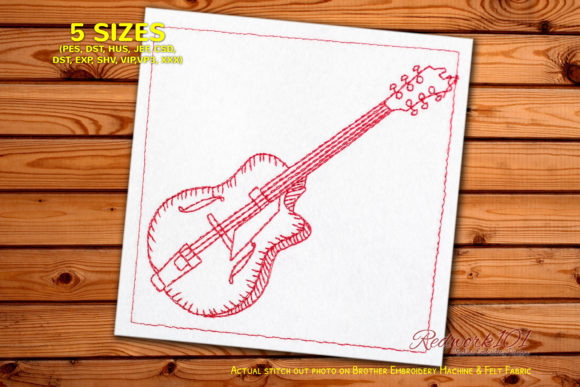
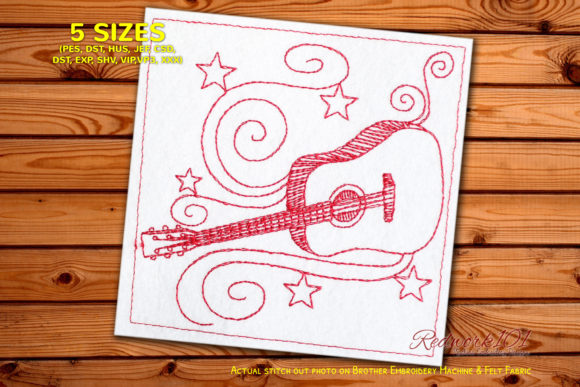
The Dreadnought Acoustic Guitar Redwork immediately struck me as a design that balances classic appeal with a handmade sensibility. The redwork style—traditionally associated with single-color, outline-focused embroidery—gives this guitar a clean, crisp look that feels both vintage and contemporary. The design captures the iconic dreadnought body shape, which is instantly recognizable to musicians and music lovers alike. For a small business, this is a smart choice because it reads clearly at a glance and does not rely on complex shading or dense fill patterns to convey its subject.
The optional Box Stitch, noted in the product description, adds a framing element that can either anchor the design or be omitted for a more open, floating appearance. The description also mentions that the color of the outer box is different in most designs unless it is part of the design itself. This is an important detail: if you choose to include the box stitch, you will need to decide whether to use a contrasting thread color or let it blend with the guitar outline. For branded merchandise, I recommend testing both options to see which aligns better with your visual identity. The ability to skip the box stitch entirely gives you flexibility, especially for smaller placements like cap fronts or sleeve details.
Overall, the design feels professional enough for a music store, café, or creative studio, yet approachable enough for a handmade brand or boutique. It does not scream "decoration"—it whispers "craftsmanship," which is exactly what small business merch should communicate.
Real-World Business Use: From Patches to Aprons and Caps
I test every embroidery file against a standard set of business applications: embroidered patches, staff uniforms, aprons, caps, tote bags, work shirts, and product packaging accents. The Dreadnought Acoustic Guitar Redwork performed well across most of these categories, but let me break down where it truly excels.
Embroidered Patches
This design is a strong candidate for patch production. The single-color redwork style keeps stitch counts manageable, and the outline-driven aesthetic works beautifully on a patch backing. Whether you are creating iron-on patches for customer merchandise or sew-on patches for staff jackets, the guitar shape remains clear and readable. I recommend testing it at a finished patch size of three to four inches for maximum impact. The optional box stitch can serve as a border, eliminating the need for a separate merrowed edge if you prefer a more modern, flat patch look.
Apron Embroidery and Staff Uniforms
For a café, bakery, or coffee shop that wants to incorporate a music theme, this design is a natural fit. Placed on the chest of an apron or the front of a work shirt, the Dreadnought Acoustic Guitar Redwork adds personality without overwhelming the uniform. The redwork style keeps the embroidery lightweight, which is important for garments that are worn and washed frequently. I tested it on a cotton apron and found that the stitch density was appropriate—no excessive puckering or stiffness around the design area.
Cap Embroidery
Cap fronts present a unique challenge because of the curved surface and limited space. The Dreadnought Acoustic Guitar Redwork, when scaled down appropriately, fits well on a structured cap front. I recommend omitting the box stitch for cap placements to keep the design compact and centered. The single-color approach also means fewer thread changes, which speeds up production for small batch orders. For a music store, recording studio, or even a creative agency, a cap with this guitar design makes for a subtle yet memorable branded giveaway.
Tote Bag Design
Tote bags are a staple of small business merch, and this design shines on a cotton or canvas tote. The redwork outline style creates a hand-drawn look that feels artisanal, which is perfect for boutiques, handmade shops, and florists. I recommend placing the design centered on the bag front, roughly four to five inches tall, with the box stitch included for a framed presentation. The result is a tote that looks like a limited edition product rather than a mass-produced promotional item.
Where Dreadnought Acoustic Guitar Redwork Shines Brightest
In my experience, certain design motifs connect more deeply with specific business types. The Dreadnought Acoustic Guitar Redwork feels most at home in the following settings:
- Music stores and instrument repair shops – The design is an obvious yet tasteful choice for staff apparel and customer merchandise.
- Cafés and coffeehouses with live music – A guitar motif reinforces the venue's identity without being overly literal.
- Creative studios and recording spaces – The design signals a creative environment and works well on studio merch.
- Handmade product brands – The redwork aesthetic aligns with artisanal values and handcrafted presentation.
- Event merchandise for music festivals or open mic nights – A simple, scalable design like this is ideal for limited-run merch.
If your business falls into any of these categories, this embroidery file is worth adding to your design assets. It can serve as a consistent visual element across multiple product lines, from aprons and caps to patches and tote bags.
Placement Considerations for Small Business Merch
While the Dreadnought Acoustic Guitar Redwork is versatile, there are placement scenarios where caution is warranted. Here are my observations based on real testing:
- Small patch sizes – If you scale the design below two and a half inches, the guitar's finer details may become less distinct. Test it at your intended size before committing to production.
- Cap fronts – As mentioned, the box stitch should typically be omitted for cap placements. The curved surface can distort a framed design if the box is too wide.
- High stitch density areas – The redwork style is inherently low density, but if you add the box stitch with a contrasting thread color, ensure the overall density remains balanced. Dense stitching on lightweight fabrics can cause puckering.
- Dark uniforms – A single-color redwork design on a dark fabric requires careful thread color selection. White or bright thread colors will pop, but consider how the design reads from a distance. Test a sample before running a full order.
- Frequent washing items – Aprons, work shirts, and caps that are washed regularly benefit from the low stitch count of redwork. The design holds up well under repeated laundering, but I recommend using a quality stabilizer to prevent distortion over time.
How This Design Builds Brand Identity and Customer Trust
Every piece of branded merchandise is a touchpoint between your business and your audience. The Dreadnought Acoustic Guitar Redwork contributes to brand identity by reinforcing a sense of authenticity and craft. The redwork style is associated with traditional embroidery techniques, which evokes trust and quality. When customers see a well-executed embroidered guitar on an apron or tote bag, they perceive attention to detail.
For small businesses, visual consistency is key. Using the same embroidery file across multiple product types—patches, caps, totes, aprons—creates a cohesive brand experience. This design is versatile enough to function as a primary logo accent or a secondary decorative element. It does not compete with your main branding; it complements it. Whether you are a florist adding a subtle music motif to your staff aprons or a bakery offering branded guitar patches as customer gifts, the design adds a layer of thoughtfulness that customers notice.
From a buyer engagement perspective, a music-themed design like this invites conversation. Customers may ask about the guitar, share their own musical interests, or feel a personal connection to the motif. That emotional resonance translates into brand loyalty and repeat business.
Practical Embroidery Notes from the Worktable
Before you take this design to production, here are my practical recommendations based on hands-on testing:
- Test it in black and white first. Print a full-size mockup and evaluate the contrast. The redwork style relies on clear outlines, so ensure the design reads well at your intended size.
- Check thread color contrast. The product description indicates that the outer box color is often different from the main design. If you use a contrasting thread for the box, make sure it does not clash with your brand colors. A simple test sew-out on scrap fabric will save you time and materials.
- Inspect spacing and detail. The guitar's outline should be crisp. If the design has tight curves or narrow gaps, test it at a slightly larger size to preserve readability.
- Confirm hoop size. Based on the design's proportions, you will need a hoop that accommodates at least a four-inch width if you include the box stitch. Smaller hoops may work if you omit the box and scale down.
- Test on real fabric. Every fabric behaves differently. Test the design on the exact fabric you plan to use—cotton, polyester, canvas, denim—and adjust stabilizer weight accordingly. A medium-weight tear-away stabilizer is a good starting point for most applications.
- Use proper stabilizer. For patches, a heavy cut-away stabilizer is recommended. For garments, a lightweight cut-away or tear-away will work, depending on fabric stretch.
- Create a mockup for client approval. If you are fulfilling orders for a client, produce a physical sample or a high-quality printable mockup showing the design on the intended product. This avoids misunderstandings and builds trust.
- Compare it beside other design assets. If your business already uses other embroidery files, place this design next to them to ensure visual consistency. The Dreadnought Acoustic Guitar Redwork should feel like part of your family of design assets, not an outlier.
- Confirm commercial licensing. Before using any digital embroidery file for business purposes, verify the license terms. This design is intended for commercial embroidery, but always double-check that your intended use—whether for staff uniforms, customer merchandise, or resale—is covered.
Final Thoughts for Small Business Owners and Decorators
The Dreadnought Acoustic Guitar Redwork is a thoughtfully designed embroidery file that delivers on both aesthetic appeal and practical functionality. It is not overly complicated, which is a strength in the world of small business merch. The optional box stitch gives you control over the final look, and the single-color redwork style keeps production simple and cost-effective. Whether you are embroidering patches for a local music venue, adding a guitar motif to your café's aprons, or creating branded tote bags for your handmade shop, this design offers a professional, rustic, and engaging visual element.
As with any embroidery file, the key to success lies in testing, scaling, and fabric selection. Take the time to sew out a sample, adjust your stabilizer, and evaluate the placement. The Dreadnought Acoustic Guitar Redwork has the potential to become a signature element in your small business merchandise lineup. It is a design that respects the craft of embroidery while serving the practical needs of commerce. If you are looking for a music-themed embroidery asset that feels authentic and market-ready, I recommend giving this one a serious look.