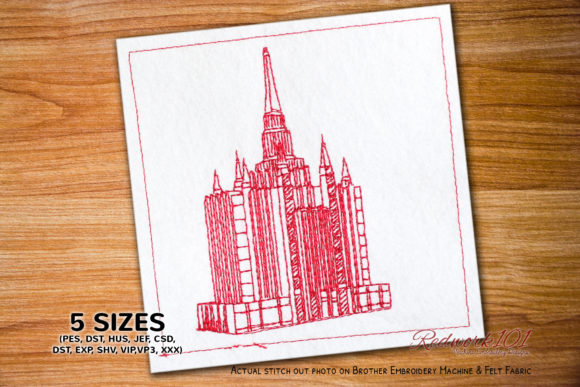
Bangkok Thailand Temple Redwork: Craft Fair Review
As an embroidery designer who has prepped for dozens of weekend craft fairs, I have learned to judge a machine embroidery design not by how it looks on a screen, but by how it behaves on a tote bag, how it catches light on a tea towel, and whether it makes a customer stop mid-aisle. When I first opened the Bangkok Thailand Temple Redwork embroidery file, I knew this was not a generic travel souvenir. This is a design with genuine handmade market potential, provided you understand its strengths and its quirks before you stitch it out for your booth.
First Impression: Elegant, Cultural, and Conversation-Starting
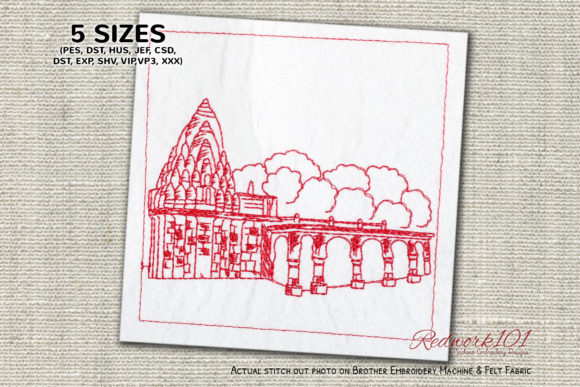
Bangkok Thailand Temple Redwork lands somewhere between elegant and decorative. It is not a cute cartoon, not a rustic farmhouse phrase, and not a minimalist line drawing. It is a detailed architectural motif rendered in the classic redwork style, which gives it a heritage feel that stands out among the usual vacation-themed designs. The redwork treatment softens what could be a rigid temple silhouette into something that reads as handcrafted and thoughtful. For a craft fair product, this is a strong position. Customers who have traveled to Thailand, or who love Southeast Asian art, will feel an immediate pull. The design feels premium, not touristy, and that distinction matters when you are pricing finished goods at a market.
The redwork color palette is inherently cohesive. Using a single thread color keeps the design feeling unified, which is a practical advantage when you are producing multiple items for a booth. It also means you can pre-wind bobbins and batch stitch without constant thread changes, a real time-saver for the small shop product maker who needs to build inventory quickly.
Product Applications: Where This Design Shines at a Craft Fair
I tested Bangkok Thailand Temple Redwork on several product blanks to see where it performs best and where it might underwhelm. Here is what I found.
Tote Bags and Market Bags
This is the natural home for this design. A medium to large tote bag gives the temple motif enough breathing room to read clearly. The redwork line style looks striking against natural cotton or linen canvas. I recommend hooping securely and using a medium-weight cutaway stabilizer to support the stitch density. The design works well as a centered focal piece, but it also functions as a smaller accent near the top hem if you want to pair it with a travel-themed quote or a destination name. For a craft fair booth, a stack of tote bags with Bangkok Thailand Temple Redwork will attract the customer who values unique, travel-inspired handmade products.
Apron Embroidery
On an apron, this design sits beautifully on the bib or the lower front panel. The redwork style keeps the apron looking professional rather than casual. I found that the design holds its detail well on cotton twill aprons. Avoid overly textured apron fabrics, as the fine lines of the temple can get lost in a heavy weave. For the craft fair seller, an embroidered apron with this design becomes a giftable item for cooking enthusiasts who also love travel.
Tea Towel Embroidery
Tea towels are a staple for any handmade product booth, and Bangkok Thailand Temple Redwork brings a touch of sophistication to this category. The redwork on a white or cream tea towel is classic, and the temple motif gives the towel a destination-story feel. I recommend using a light to medium-weight tearaway stabilizer and testing the design on a sample towel first. The stitch density is moderate, so the design should not distort the fabric. However, if the towel has a textured weave, the fine details may not register as cleanly. A smooth, high-quality cotton towel is your best bet.
Embroidered Patches
Patches are a low-risk, high-margin product for craft fairs. Bangkok Thailand Temple Redwork can be stitched as a standalone patch using a satin border or a stitched edge. The redwork style is particularly well-suited to patches because the single-color line art translates well at smaller sizes. I recommend testing the design at the exact patch size you intend to sell. If the temple details become too dense at a small scale, consider enlarging the patch slightly to preserve clarity. Patches can be sold as sew-on or iron-on additions for jackets, backpacks, and hats, appealing to travelers and collectors.
Caps and Hats
Embroidering caps is notoriously tricky, and Bangkok Thailand Temple Redwork requires careful placement. The design works best on the front panel of a structured cap, but the curved surface can distort the temple's symmetry. I recommend using a cap hoop or a hoop with a cap frame attachment. Keep the design size moderate so the temple does not wrap too far around the curve. Test on a scrap cap before committing to a batch. If the design holds its shape, a cap with this redwork temple becomes a unique, wearable piece of travel art that customers will notice across the booth.
Fabric Pouches and Small Accessories
Small pouches, coin purses, and makeup bags are popular craft fair items, and Bangkok Thailand Temple Redwork can be adapted to these formats. The design works as a centered motif on the front panel. Because the pouch surface is small, the design will be the hero element. I recommend checking the stitch density on a sample to ensure the fabric does not pucker. A smooth cotton or linen pouch fabric is ideal. These small items are easy to produce in batches and offer a lower price point for customers who want a handmade souvenir.
Pillow Covers and Home Decor
Pillow covers with Bangkok Thailand Temple Redwork add a decorative, travel-inspired accent to a home. The redwork style lends itself well to neutral or natural-toned fabrics. I recommend using a zippered cover or an envelope closure to keep the finished product polished. The design reads as elegant and subtle, making it suitable for a living room or bedroom. For craft fair display, pair it with other travel-themed pillows or home goods to create a cohesive section in your booth.
Practical Selling and Production Points
Bangkok Thailand Temple Redwork is easy to understand at a glance. A customer does not need to study the design to recognize the temple silhouette. This instant readability is a major advantage in a busy craft fair environment. The design works as both a small accent and a larger focal motif. I tested it at a few different size scales and found that the redwork line art holds up well when enlarged, as long as the stitch density is adjusted accordingly. For a large tote bag, a bigger size creates a bold statement. For a small pouch, a compact version stays charming.
When photographing finished products for your Etsy seller listings, this design performs well. The redwork color contrasts nicely with light backgrounds, and the temple shape is recognizable even in a thumbnail. I recommend using natural light and a neutral backdrop to let the red thread pop. A printable mockup of the design on a tote bag or apron can also help you test listing layouts before you stitch the final product. The design assets are straightforward to work with, and the single-color stitching simplifies both photography and production.
For batch production, Bangkok Thailand Temple Redwork is efficient. The single-thread design means less bobbin winding and fewer thread changes. As long as you confirm the hoop size fits your production setup, you can stitch multiple items in a row without interruption. This repeatability is key for the small shop product maker who needs to stock a booth with enough inventory to turn a profit.
Careful-Use Notes: What to Watch For
No design is perfect, and Bangkok Thailand Temple Redwork has a few areas that require attention. The stitch density is moderate, but there are zones where the temple details cluster together. If you are stitching on a thick fabric, such as heavy canvas or a textured towel, those dense areas can cause the needle to struggle or the fabric to pucker. I recommend testing on a scrap piece of your chosen fabric before producing a full batch. Use a fresh needle and a high-quality stabilizer, preferably cutaway for medium to high density areas.
Tiny details in the temple motif may lose clarity at smaller sizes. If you plan to stitch this design on a cap or a small patch, enlarge the design slightly or reduce the stitch count to keep the lines readable. Small lettering is not a feature of this design, which is actually a benefit. The temple itself is the message, and it communicates without words. That makes it accessible to a wider audience, including international customers at your craft fair.
Dark fabric is not ideal for this redwork design. The red thread will not show up well on black, navy, or dark green backgrounds. Stick to light or medium-toned fabrics where the redwork can stand out. If you want to offer a dark-fabric version, consider using a white or gold thread instead, but test the contrast first. The color of the outer box is optional per the product description, and in most designs the box is a different color unless it is integral to the motif. You can skip the box stitch entirely to simplify the design and keep the focus on the temple.
For textured towels, thick fabrics, and curved cap surfaces, the design may require extra stabilization. Use a topper or a water-soluble stabilizer on towels to prevent the stitches from sinking into the nap. On caps, use a cap hoop and a stiff backing to maintain the temple's symmetry. Always test first.
Visual Appeal, Customer Attention, and Booth Display
Bangkok Thailand Temple Redwork has a quiet confidence. It does not scream for attention, but it draws the eye of the customer who appreciates craftsmanship and cultural detail. In a craft fair booth, this design works well when grouped with other travel-inspired pieces or displayed on a simple, high-quality product like a linen tote or a cotton apron. The red thread against a light fabric creates a clean, classic look that photographs beautifully and feels premium in person.
Customer attention goes to items that tell a story. This design tells a story of travel, architecture, and tradition. The handmade quality of the redwork stitching reinforces the artisan feel of your booth. Buyers who value handmade products will recognize the care that went into stitching a detailed temple motif. The design lifts the perceived value of the finished product, allowing you to price your items at a higher point than generic vacation-themed embroidery.
Brand consistency is another benefit. If you use Bangkok Thailand Temple Redwork across multiple product types, your booth will have a unified look. A customer who buys a tote bag today may return next week for a matching tea towel or pillow cover. The redwork style becomes a signature of your handmade product line.
Practical Embroidery Designer Notes
Before you stitch your first product for sale, follow these steps. Test the design on scrap fabric identical to your final product. Check the thread contrast against the fabric color. Review the spacing around the temple to ensure the design is centered and balanced. Confirm the hoop size is appropriate for your machine and your product blank. Inspect the stitch density and adjust if needed. Use the right stabilizer for the fabric type: cutaway for stretchy or dense fabrics, tearaway for stable wovens, and water-soluble topper for textured surfaces. Create at least one real mockup, not just a digital preview, to see how the design behaves in the real world. Compare fabric colors to find the backdrop that makes the redwork pop. And before you sell any finished product, confirm the commercial licensing terms of the embroidery file. The design description does not specify license details, so check with the seller or distributor to ensure you are allowed to sell items made from this machine embroidery design.
Bangkok Thailand Temple Redwork is a strong addition to any craft fair product line. It sits in the Vacation category, but its appeal goes beyond simple travel nostalgia. It is a decorative, elegant, and culturally rich design that performs well on tote bags, aprons, tea towels, patches, caps, pouches, and pillow covers. With careful attention to fabric choice, stabilizer, and size scaling, this design can become a bestseller in your handmade market booth. Stitch it out, test it, and let the temple speak for itself.